
COMIC DRAMA; 1hr 40min
STARRING: Ethan Hawke, Margaret Qualley, Bobby Cannavale, Andrew Scott
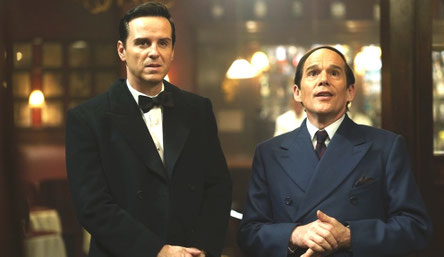

Something blue: from left, Scott and Hawke
From 1919 to 1943, composer Richard Rodgers (Scott) and lyricist Lorenz Hart (Hawke) made sweet American music together on Broadway and in movies. The multiple shows and songs they co-wrote — “The Lady Is a Tramp,” “Bewitched, Bothered and Bewildered,” “Isn’t It Romantic,” “Blue Moon” and scores of others — glittered in a galaxy of hits. But on the night of March 31, 1943, when director Richard Linklater and screenwriter Robert Kaplow’s life-based dramatisation is set, 47-year-old Hart is a walking testimony of bitterness and regret.
Having sat resentfully through the premiere of Rodgers’s sure-fire Broadway hit Oklahoma!, written with his new lyricist, Oscar Hammerstein II (Simon Delaney), Hart has taken himself off to showbiz watering hole Sardi’s to rendezvous with the 20-year-old beauty of his dreams (Qualley as Elizabeth Weiland). And dreams would be the operative word, since Elizabeth is a sizzling tamale, while Hart, although blessed with coruscating wit and the gift of endless gab, is barely five feet tall, an alcoholic tumbling off the wagon, and gay (although trapped in the closet of a repressive age).
As the evening wears on and the shots line up, dispensed by Sardi’s professionally laconic bartender Eddie (Cannavale), Hawke brings hyper life to Hart’s reckless self-sabotage, fawning falsely over Rodgers when he arrives with Hammerstein for their victory party, then pummelling his ex-partner with a torrent of outlandish ideas for an unlikely future collab: although he does suggest reworking an earlier show, a guarded Rodgers is visibly tired of Hart’s flighty ways, while Hart can barely contain his envy at the Oklahoma! raves.
It’s not that there’s no love between them — by Rodgers’s own admission, Hart is his oldest friend. It’s that no amount of love can ever be enough. Working with Hawke for the tenth time, Linklater deconstructs the psyche of a drowning man in a seamless paradox of poetry, pathos and scathing jabs. Garrulous and tragic to the close of play, Hawke takes ownership of them all.
