DRAMA; 2hr 13min (Norwegian with subtitles, English)
STARRING: Renate Reinsve, Stellan Skarsgård, Elle Fanning, Inga Ibsdotter Lilleaas
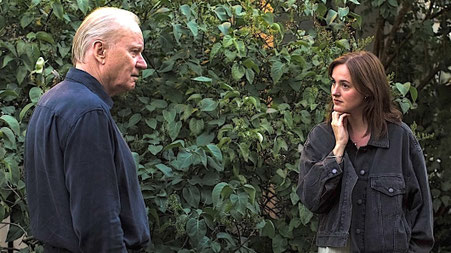

Finer feelings: Skarsgård and Reinsve
The razored edge of rocky family dynamics is never sharper than when after the death of a loved one. For Nora Borg (Reinsve), that teeter-totter state of play is with her father, Gustav (Skarsgård). A has-been film director and bolshie big drinker, Gustav split from his late wife, Sissel, when Nora and her sister, Agnes (Lilleaas), were girls. Adult Nora has become an actress who battles intense stage fright, among other debilitating, most likely deadbeat dad–related conditions. Wife and mother Agnes is, meanwhile, a reminder of everything Nora is never likely to have, which does nothing for her woe-is-me mood.
When Gustav swings by Sissel’s wake, it’s with the misjudged ulterior motive of offering Nora the lead in what he hopes will be his comeback movie, about his mother’s suicide after Nazi torture. Hmm. After Nora summarily rejects this depressing prospect, Gustav recruits an all-American star (Fanning as golden girl Rachel), who, while entirely unsuitable for a Norwegian wrist-slitter, gamely agrees to give the dismal role a whirl. Adding insult to this casting injury, the insensitive auteur will be shooting the film in the Borg’s Oslo family home, which he annoyingly still owns.
As a proving and battle ground for intense generations of Borgs, the house is also a character in director Joachim Trier’s hefty slice of inner life. The current, losing battle for Gustav and Rachel is to get his rebound film together. Nora is battling with an aloneness on which Trier, who with his co-writer Eskil Vogt also worked with Reinsve on 2021’s The Worst Person in the World, hangs worshipfully tight. Not to be outdone in the downbeat department, Agnes has become obsessed with her and Nora’s suicidal grandmother. If the through-line for them all is the immutability of the family’s oppressive past, the question for Gustav and his daughters is whether a debilitating burden can be reshaped as a tie that binds. It goes without saying that there are no easy answers.